
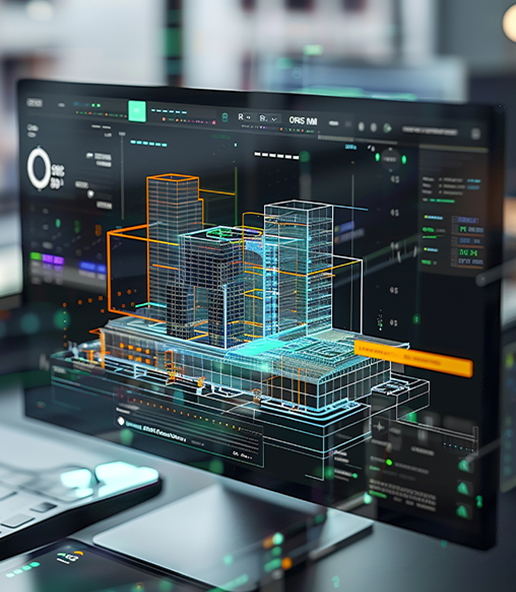
Structural engineering has evolved significantly over the past few decades. While traditional engineering principles remain the foundation of every successful project, today’s engineers now rely on advanced software to design safer, more efficient, and more accurate structures.
Modern structural design software allows engineers to analyze complex systems, simulate real-world conditions, and optimize designs long before construction begins. The result is better project outcomes, reduced risks, and improved cost efficiency.
At Vertex, we integrate industry-leading engineering software with our technical expertise to deliver structural solutions that meet the highest standards of safety, performance, and reliability.
Why Technology Matters in Structural Engineering
Every structure must withstand a variety of forces throughout its lifetime, including gravity, wind, earthquakes, and environmental conditions. Advanced software enables engineers to evaluate these forces with exceptional accuracy while reducing the possibility of human error.
Instead of relying solely on manual calculations, engineers can model entire structures digitally, making it easier to identify potential issues before construction begins.
Accurate Structural Analysis
One of the greatest advantages of modern engineering software is its ability to perform detailed structural analysis.
By creating a digital model of a building or infrastructure project, engineers can evaluate:
- Dead and live loads
- Wind loads
- Seismic forces
- Structural deflection
- Stress distribution
- Foundation performance
- Overall structural stability
This comprehensive analysis helps ensure every structural element performs as intended under both normal and extreme conditions.
Faster Design Development
Advanced software significantly shortens the design process by automating repetitive calculations and generating detailed engineering models.
Instead of spending valuable time performing manual computations, engineers can focus on refining the design, improving efficiency, and solving project-specific challenges.
This leads to:
- Faster project turnaround
- Improved design accuracy
- Better collaboration between project teams
- Reduced design revisions
Better Visualization
Modern structural software provides detailed 3D models that allow engineers, architects, contractors, and clients to visualize a project before construction begins.
These models make it easier to:
- Identify design conflicts
- Coordinate with other disciplines
- Review construction feasibility
- Improve communication among stakeholders
Clear visualization reduces misunderstandings and helps ensure smoother project execution.
Optimizing Material Usage
Engineering software can evaluate multiple design alternatives and determine the most efficient structural system for a project.
This allows engineers to optimize:
- Beam and column sizes
- Reinforcement requirements
- Steel member selection
- Foundation design
- Material quantities
Efficient material usage not only lowers construction costs but also minimizes waste and supports more sustainable building practices.
Improved Safety and Compliance
Modern structural design software is developed to support internationally recognized engineering standards and local building codes.
Engineers can verify that their designs comply with required safety regulations while maintaining structural integrity and long-term durability.
Although software provides powerful analysis tools, professional engineering judgment remains essential in interpreting results and making informed design decisions.
Supporting Complex Projects
As buildings become taller, infrastructure becomes more sophisticated, and architectural designs grow increasingly ambitious, advanced software makes it possible to analyze structures that would be extremely difficult using traditional methods alone.
From residential developments and commercial buildings to industrial facilities and public infrastructure, digital engineering tools help deliver reliable solutions for projects of every scale.
Collaboration Across Disciplines
Today’s construction projects involve close coordination between architects, structural engineers, mechanical engineers, electrical engineers, and contractors.
Modern design platforms improve collaboration by allowing teams to work from shared digital models, reducing design conflicts and improving project coordination throughout every phase of development.
This integrated approach helps minimize delays, avoid costly changes during construction, and improve overall project quality.
The Human Expertise Behind the Software
While advanced engineering software has transformed the design process, it does not replace the knowledge and experience of qualified structural engineers.
Software provides data, simulations, and calculations, but engineers apply critical thinking, professional judgment, and practical experience to ensure every design is safe, efficient, and buildable.
At Vertex, technology is a tool—not a substitute—for engineering excellence.
Building Stronger with Smarter Engineering
The future of structural engineering lies in combining innovative technology with proven engineering expertise. By leveraging advanced software for structural analysis, design optimization, and project coordination, Vertex delivers solutions that are accurate, efficient, and built to last.
Whether you’re planning a residential home, commercial development, industrial facility, or infrastructure project, our team is committed to designing structures that meet today’s demands while preparing for tomorrow’s challenges.
Looking for reliable structural engineering solutions? Contact Vertex today to discover how our technology-driven approach can help bring your project to life with confidence, precision, and lasting value.